Not all backlinks carry the same weight. You could have a hundred links pointing to your site and still struggle to rank, while a competitor with a fraction of that number outranks you easily — because their links come from sites Google actually trusts. This is the core idea behind authority backlinks, and it’s part of what agencies like BoostingFirm focus on when building link profiles that actually move rankings, rather than just padding a number.
This guide breaks down what authority backlinks really are, why they matter more than raw link count, and how to realistically start earning them.
What Makes a Backlink “Authoritative”
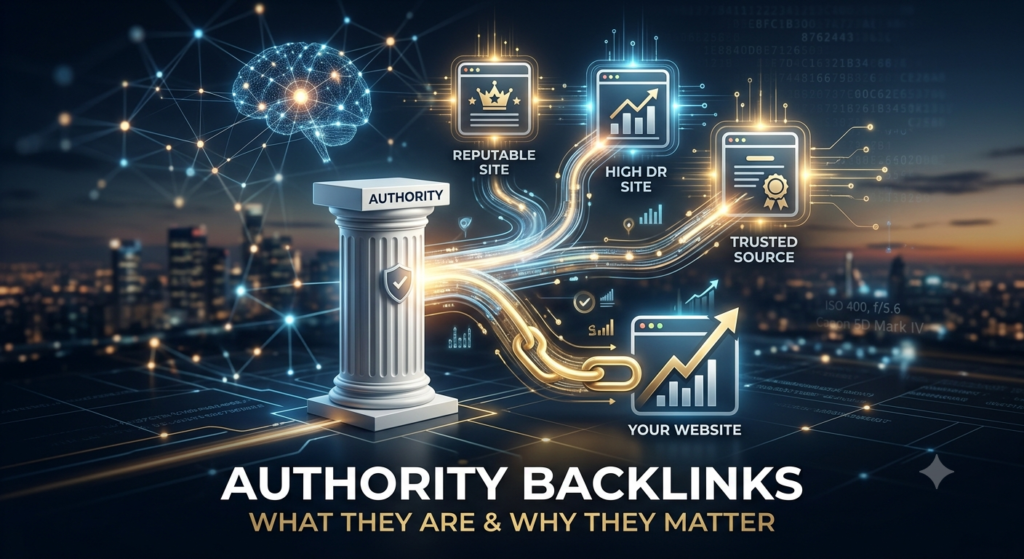
An authority backlink comes from a website that search engines already consider trustworthy and relevant. That trust gets passed along, at least partially, to whatever page it links to. A handful of signals typically determine this:
- The linking site’s own domain authority or domain rating
- How relevant the linking site’s niche is to yours
- Whether the site has a genuine audience and consistent traffic
- Whether the link sits naturally within real content, rather than a footer or sidebar stuffed with links
Moz’s explanation of domain authority makes a similar point — authority is a comparative metric meant to predict how well a site is likely to rank, not an exact science, which is why quality signals matter more than any single number.
Why Authority Backlinks Matter More Than Link Volume
It’s tempting to think more backlinks automatically means better rankings. In practice, ten links from relevant, trusted sites usually outperform a hundred links from low-quality or unrelated ones. Search engines have gotten considerably better at recognizing manipulative link patterns, so chasing volume alone can backfire.
Authority backlinks matter because they act as a genuine trust signal. A respected site linking to you is effectively vouching for your content — and that kind of endorsement is much harder to fake convincingly than a bulk directory submission.
How to Actually Earn Authority Backlinks
1. Create Content Worth Linking To
This sounds obvious, but it’s the foundation everything else builds on. Original research, genuinely useful guides, and well-organized resources tend to attract links naturally, because other site owners find them worth referencing.
2. Guest Post on Relevant, Established Sites
Writing for sites your target audience already trusts is one of the most reliable ways to earn a link from a page with real authority, while also putting your brand in front of a new audience.
3. Get Featured in Industry Roundups and Resource Pages
Many established sites maintain curated resource or “best of” pages. Reaching out with a genuinely useful addition — not a generic pitch — can earn a placement that carries real weight.
4. Build Relationships, Not Just Links
Some of the strongest authority backlinks come from ongoing relationships with other site owners, journalists, or industry peers, rather than one-off outreach emails. Over time, this tends to produce links that are harder to replicate through cold outreach alone.
Common Mistakes When Chasing Authority Backlinks
- Focusing only on a site’s authority score while ignoring topical relevance
- Buying links from networks that exist purely to sell placements, which search engines increasingly flag
- Expecting a handful of authority backlinks to fix an otherwise weak or thin website
- Treating link building as a one-time project instead of an ongoing effort
How Long Does It Take to Build Authority Backlinks?
There’s no fixed timeline, and this varies by niche and starting point. What tends to hold true across most sites is that a steady, consistent approach — a handful of genuinely relevant placements each month — builds a stronger, more durable profile than a short burst of activity followed by months of nothing.
Final Thoughts
Authority backlinks aren’t about chasing the highest number possible — they’re about earning trust signals from sites that genuinely matter in your niche. A smaller number of relevant, well-placed links will almost always outperform a large pile of low-quality ones, and that trade-off is worth keeping in mind for anyone building a link building strategy for the long term.
Read more about our white label SEO link building services →