
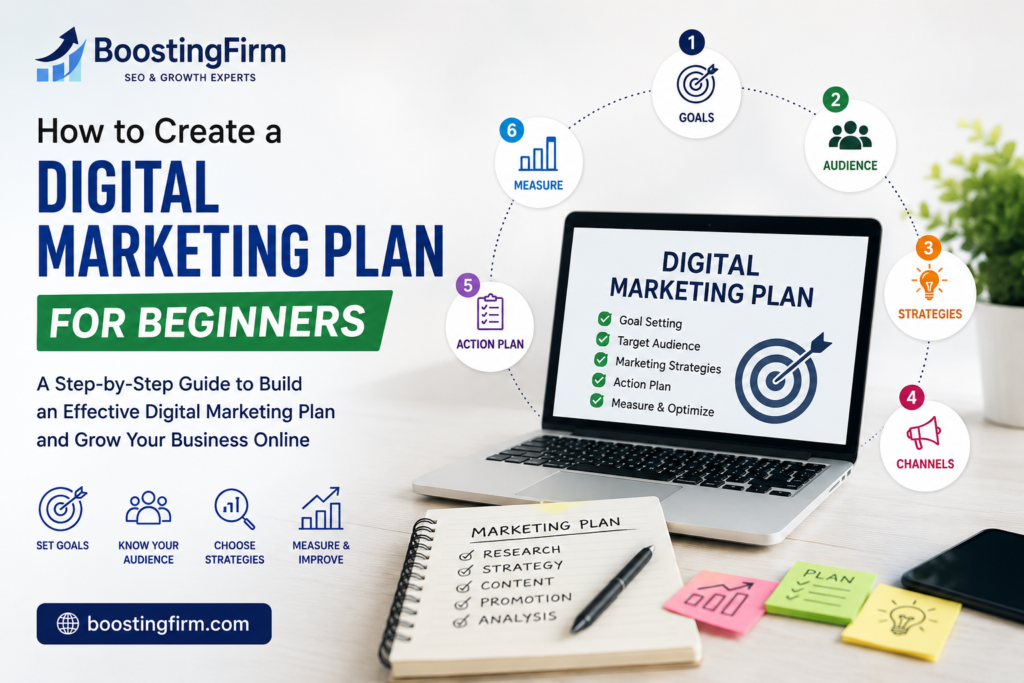
If you’re running a small business and keep hearing you need a “digital marketing plan,” but nobody’s actually explained what that means, you’re not alone. Most guides jump straight into jargon — funnels, CTRs, CAC — before even explaining the basics. Agencies like BoostingFirm work with businesses at exactly this stage, and the truth is, learning how to create a digital marketing plan for beginners doesn’t have to be complicated at all.
This guide breaks it down into plain steps you can actually follow, even if you’ve never written a marketing plan before.
What a Digital Marketing Plan Actually Is
At its core, a digital marketing plan is just a written answer to three questions: who are you trying to reach, where do they spend their time online, and what do you want them to do once they find you. That’s it. Everything else — social media, SEO, ads, email — is just the “how.”
A lot of beginners skip this step and jump straight into posting on Instagram or running ads. Without a plan, though, you’re usually just guessing, and guessing gets expensive fast.
Step 1: Get Clear on Who You’re Actually Talking To
Before touching any platform, figure out exactly who your ideal customer is. Not “everyone” — that’s not an audience, that’s a wish. Think about their age range, what problem they have that you solve, and where they’d naturally look for a solution like yours.
Write this down in a sentence or two. It sounds simple, but most marketing plans fall apart later because this step got skipped.
Step 2: Pick Two or Three Channels, Not Ten
New businesses often try to be everywhere at once — Facebook, Instagram, TikTok, LinkedIn, email, SEO, ads — and end up doing all of them badly. It’s far better to pick two or three channels where your actual audience spends time, and get genuinely good at those first.
HubSpot’s research on marketing trends consistently shows that businesses focusing deeply on fewer channels tend to see stronger, more consistent results than those spreading themselves thin across every platform available.
Step 3: Set Goals You Can Actually Measure
“Get more customers” isn’t a goal you can track. Something like “get 50 new email signups this month” is. Set two or three specific, measurable goals for your first 90 days, and check in on them weekly.
This is also where most beginners realize their plan needs adjusting — and that’s completely normal. A digital marketing plan isn’t something you write once and forget; it’s something you tweak as you learn what’s actually working.
Step 4: Map Out What Content You’ll Actually Create
Once you know your channels and goals, plan out roughly what you’ll post or publish each week. This doesn’t need to be fancy — a simple spreadsheet with dates and topics works fine when you’re starting out.
Try to mix things up: some posts that teach something useful, some that show your product or service in action, and occasionally something that just builds a connection with your audience.
Step 5: Build In a Way to Track Progress
Whatever platforms you choose, make sure you’re checking their built-in analytics at least once a week. You don’t need fancy tools when you’re starting out — just consistent tracking of the numbers tied to the goals you set in Step 3.
Over time, this is what tells you whether to keep doing something or drop it and try a different approach.
Common Mistakes Beginners Make With Their First Plan
- Trying to target everyone instead of a specific audience
- Spreading effort across too many platforms at once
- Setting vague goals that can’t actually be measured
- Never checking analytics, so mistakes repeat for months
- Expecting fast results instead of steady, compounding growth
How Long Before a Digital Marketing Plan Shows Results?
Honestly, it varies. Paid ads can show results within days, but organic efforts like SEO and content typically take a few months to gain real traction. The businesses that see the best long-term results are usually the ones that stick with a plan consistently, rather than switching strategies every few weeks.
Final Thoughts on Building Your Digital Marketing Plan
Learning how to create a digital marketing plan for beginners really comes down to picking a clear direction, focusing your energy instead of scattering it, and tracking what actually works. You don’t need a 40-page document — a focused one-page plan you actually follow beats a detailed one that sits untouched.
If building out a full strategy — including SEO and backlinks — feels like more than you want to tackle alone, that’s exactly what a specialized agency partner can help with.
Read more about our white label SEO link building services →